| Description |
Facebook Post 122 African Dance Mask, 2008.06.0001,
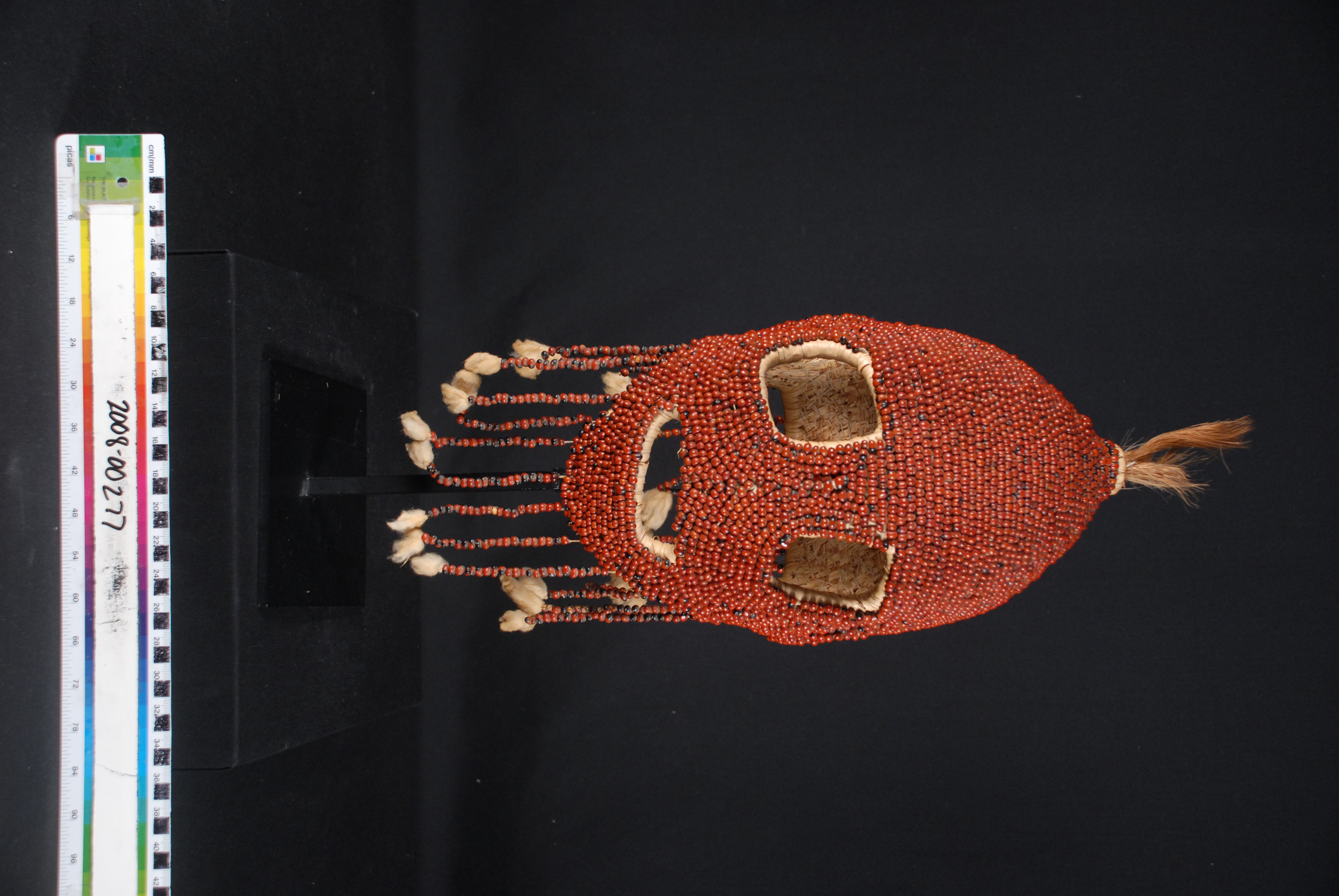
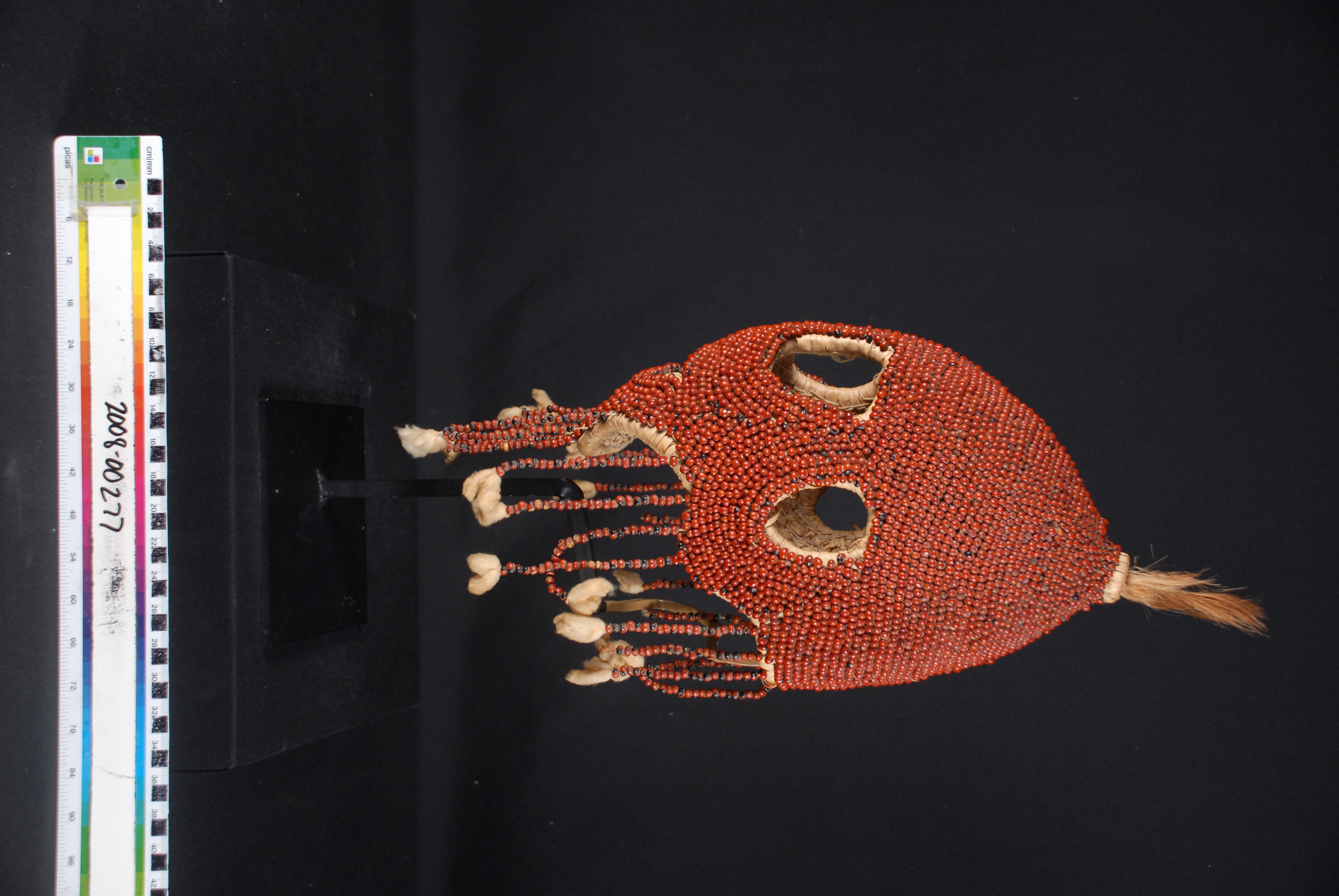
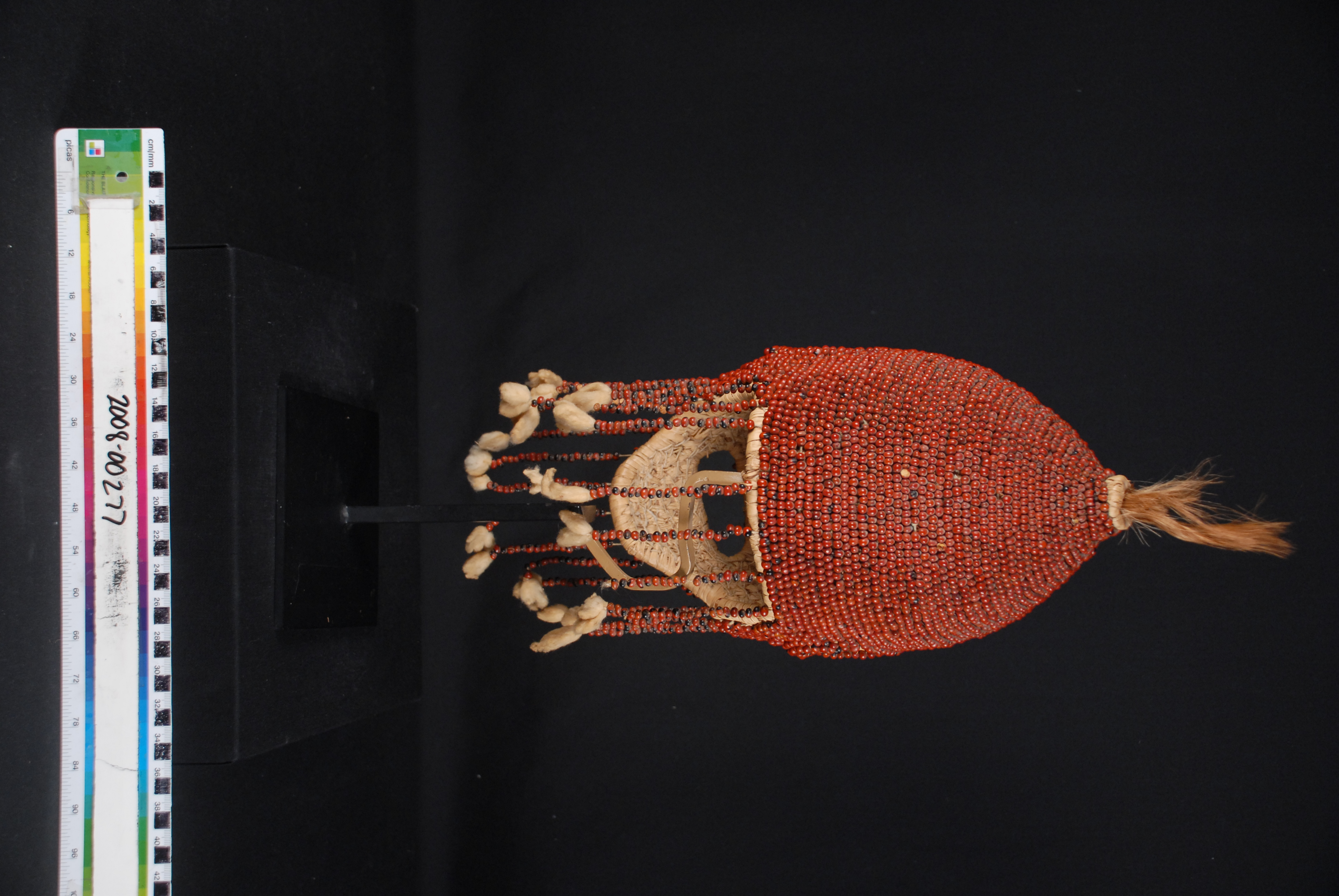
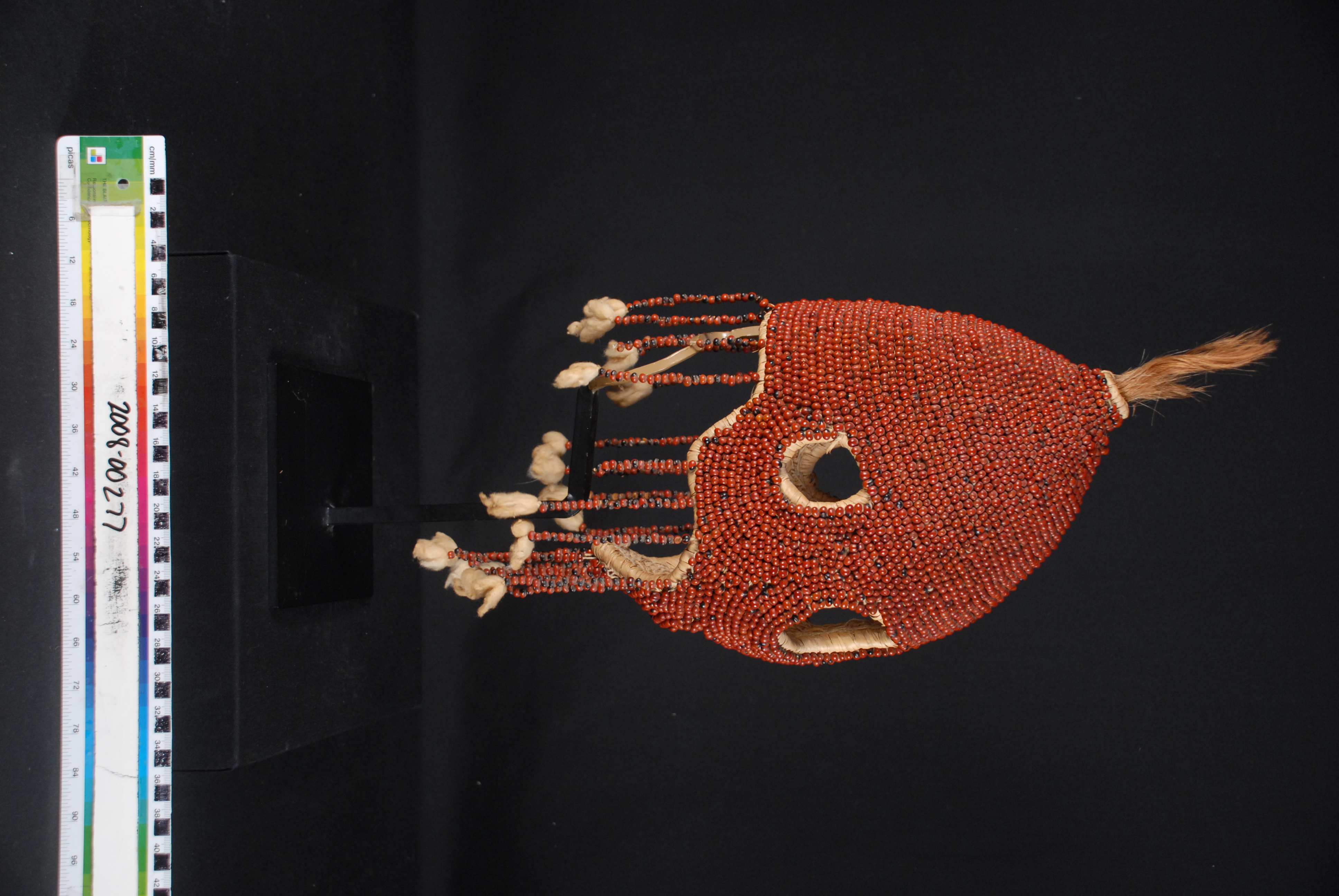
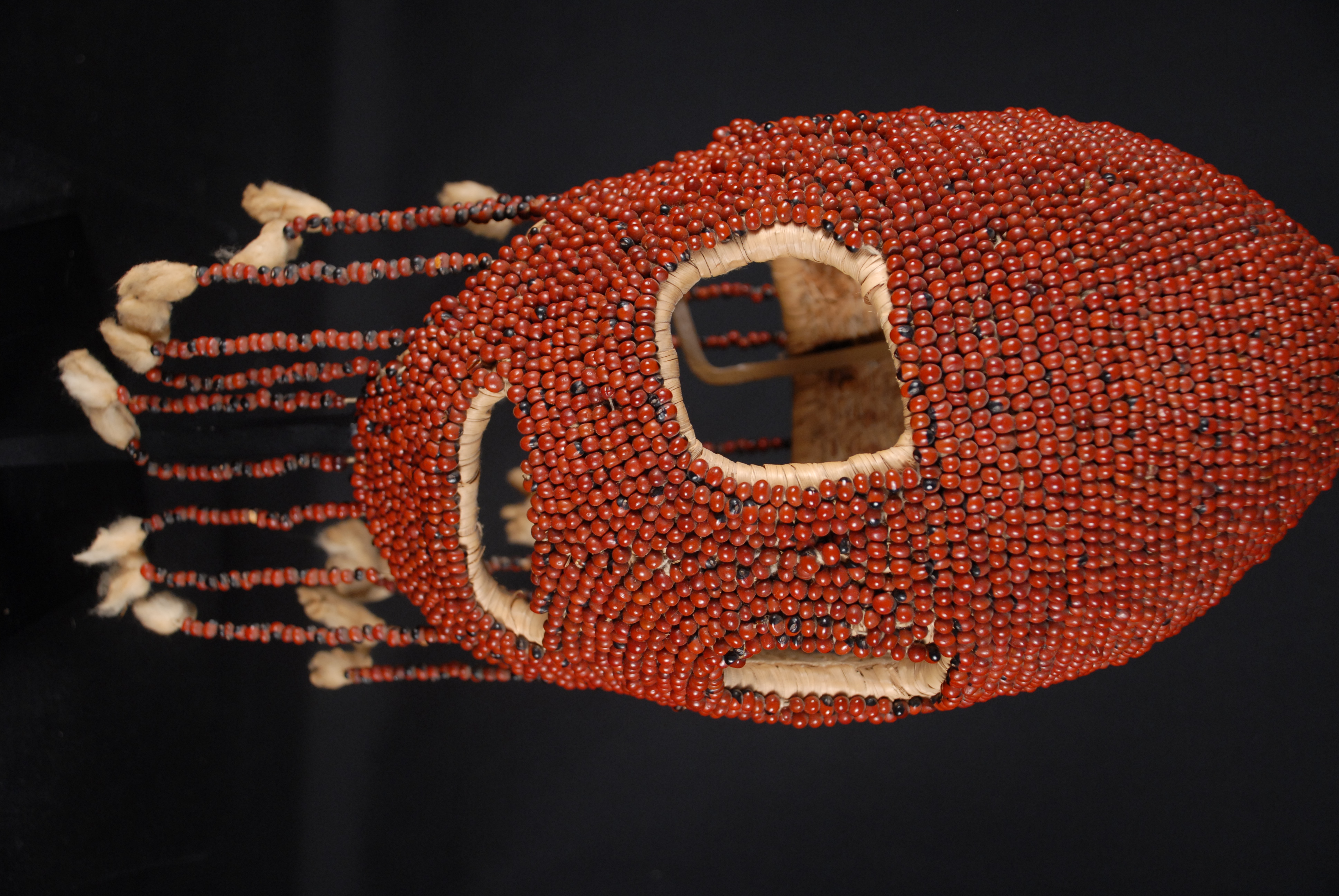
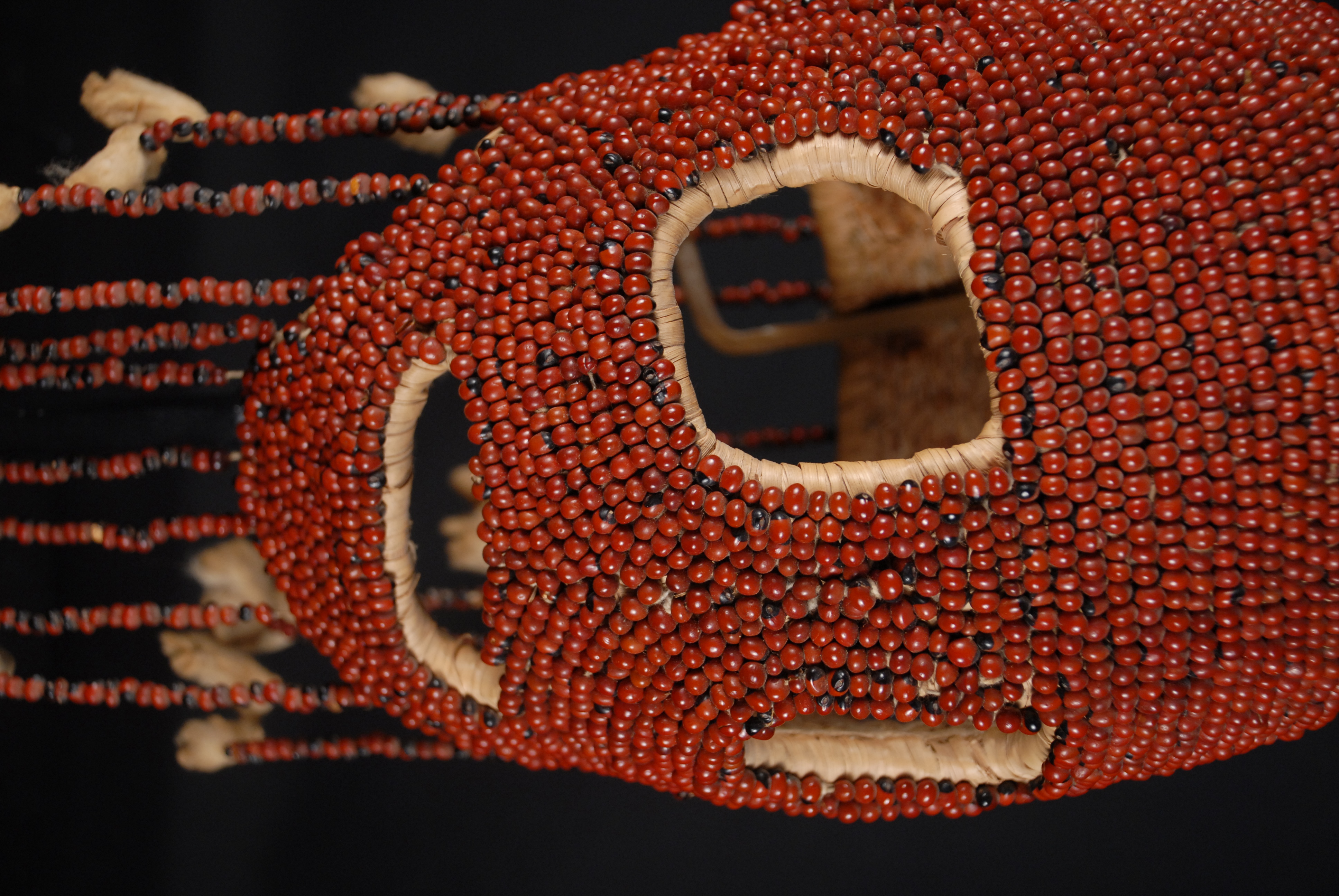
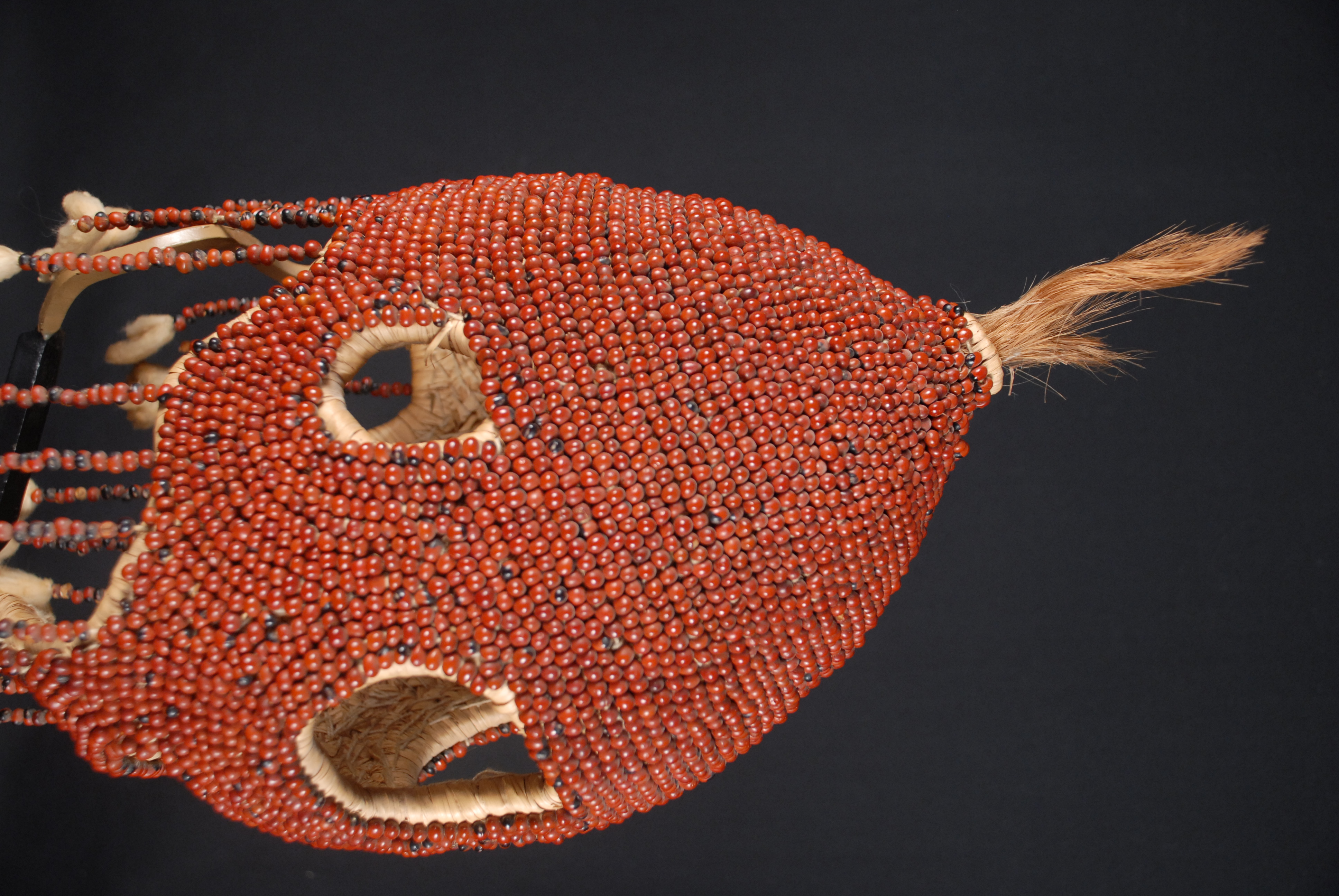
Featured Object: Angas Dance Mask
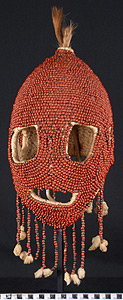
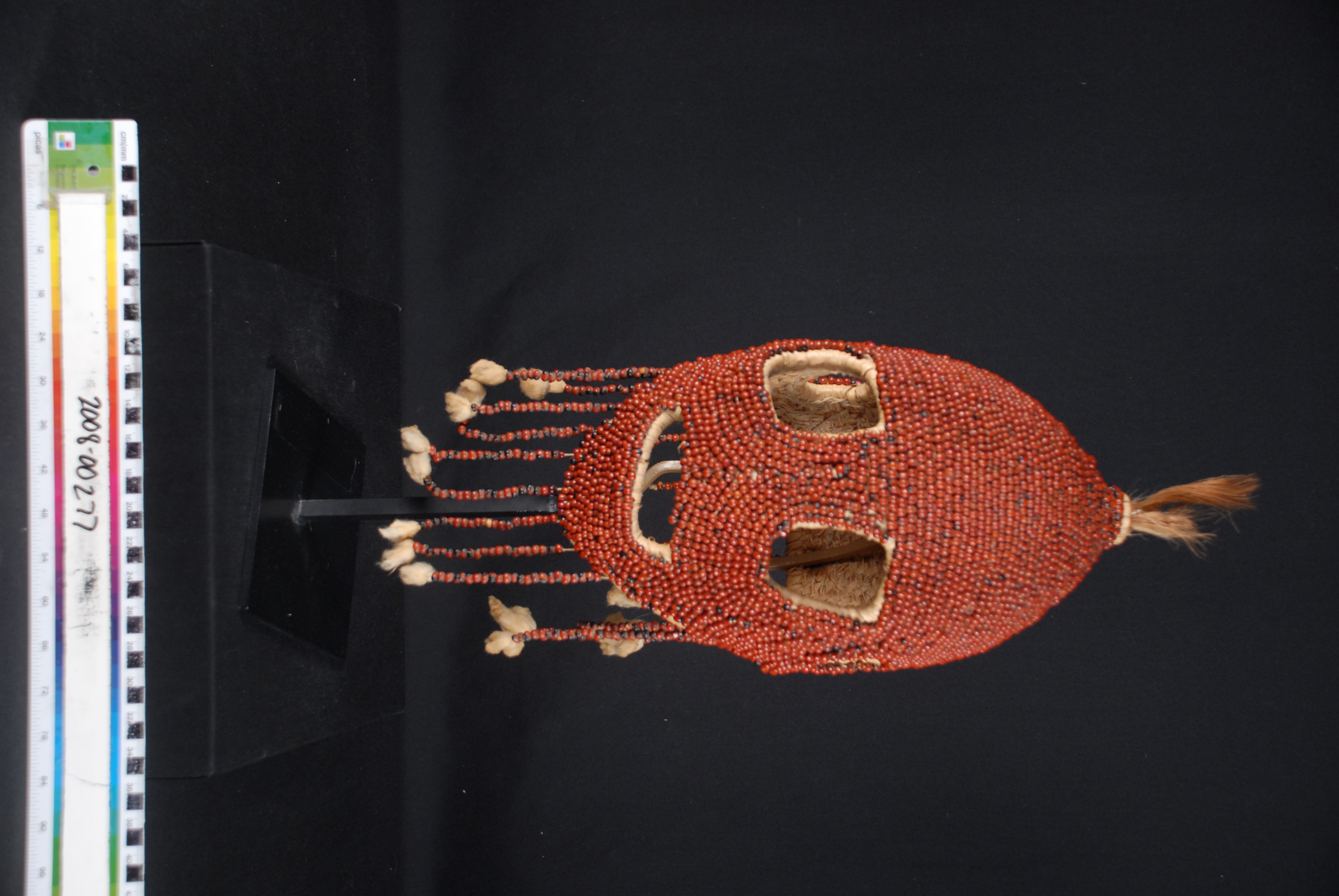
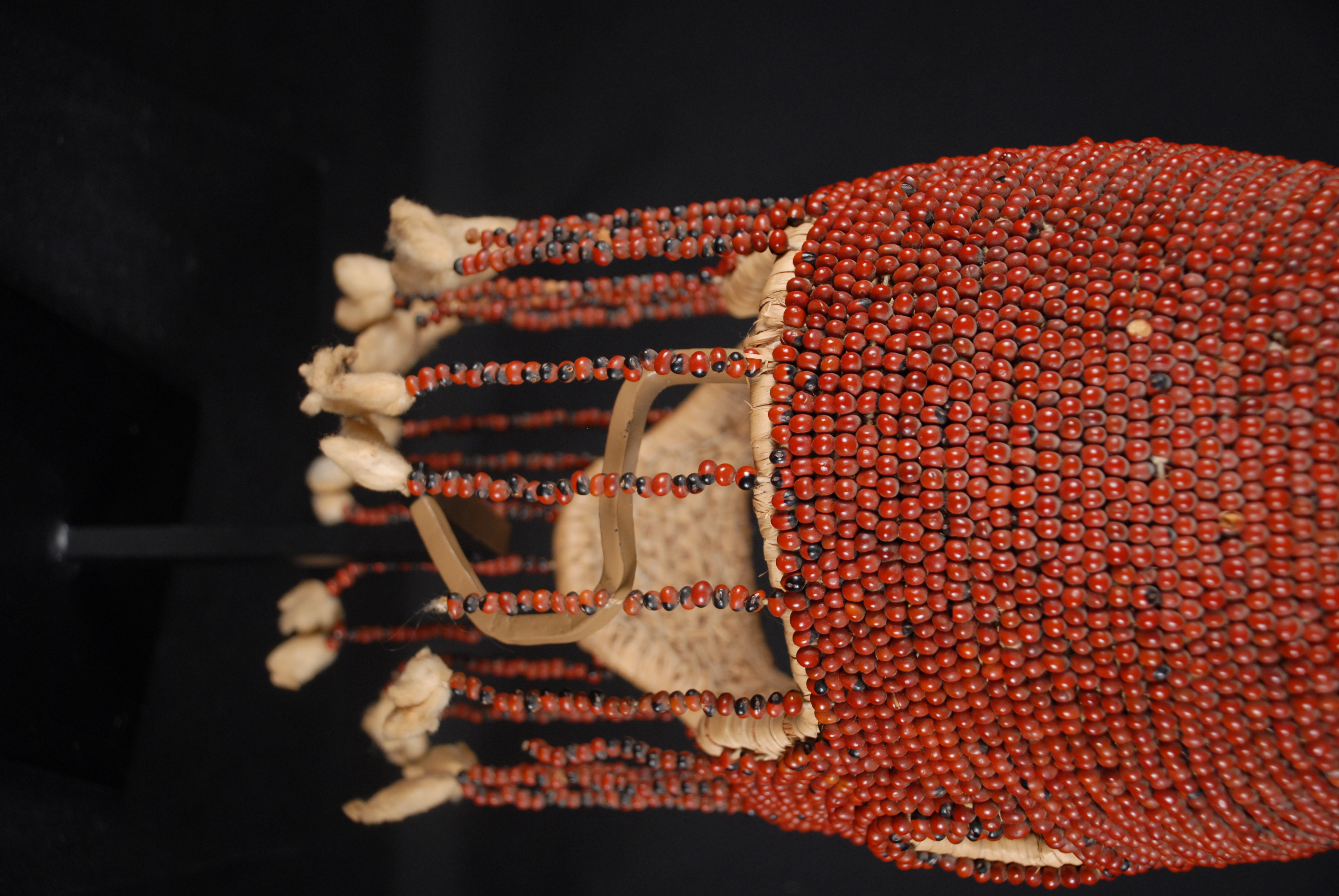
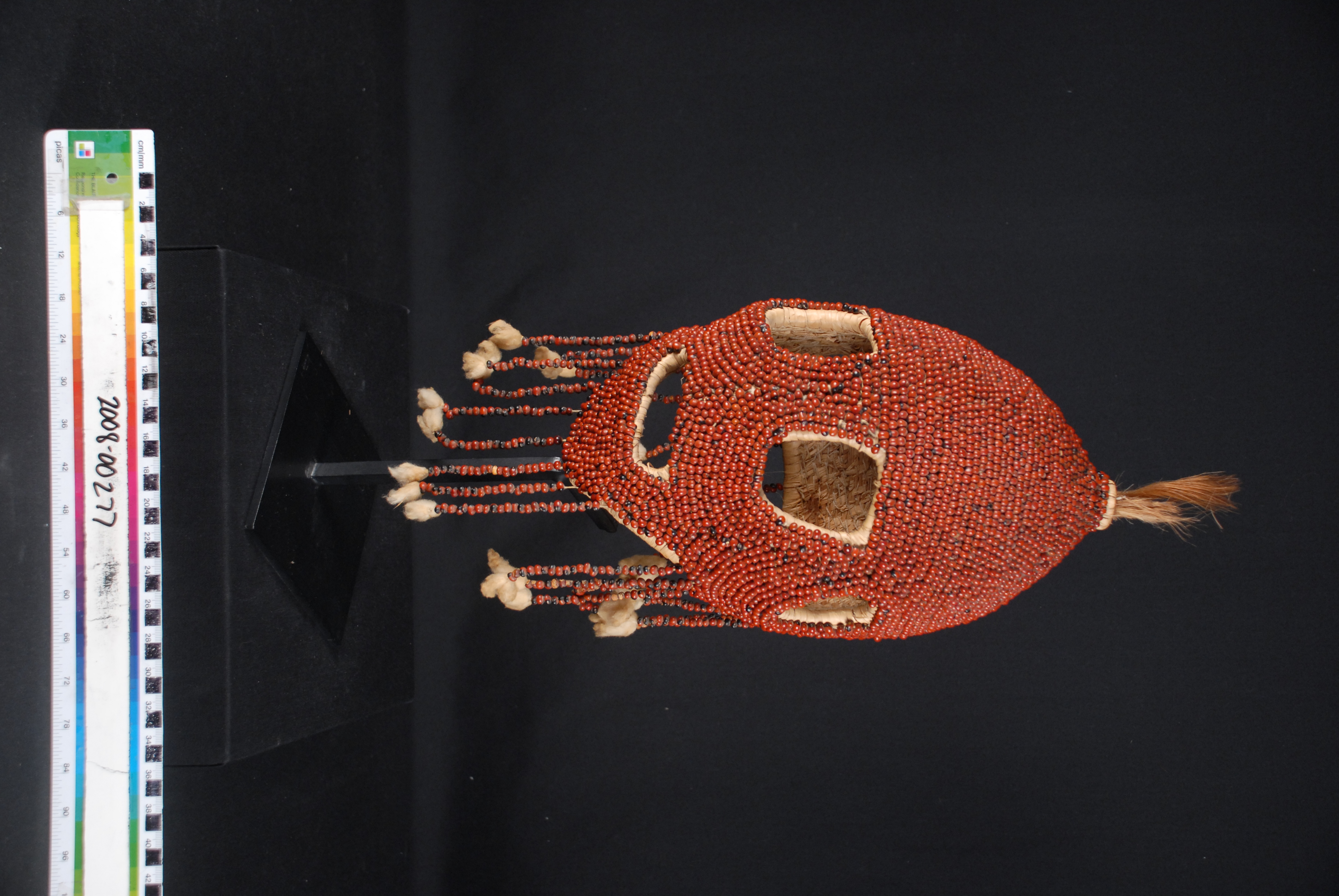
This dance mask comes from the Ngass, or Angas, people located in the Plateau State region of northeastern Nigeria. The mask is made of plant fibers woven together and decorated with red abrus seeds and tufts of cotton. The mask is meant to cover the entire head and was likely worn with a billowing cloth robe to complete the masquerade.
A mask such as this was possibly used as part of a masquerade for a men's secret society. The design of this mask and use of red abrus seeds for decoration is extremely similar to the masks used for the Jankai masquerade by the Hausa and other groups within the Plateau State. Jankai is a men's secret society, and the name is a Hausa word meaning "Red Head". Jankai appears at harvest-time dressed in a red helmet mask and billowing cloth garment.
Elizabeth Isichei, in the article "Change in Anaguta Traditional Religion" describes the Jankai masquerade thus: "the dance is wild, and the dancer achieves an ecstatic state in which great physical feats are possible, with dizzying whirls and great bounds into the air. The dancer lashes out at bystanders with rods and thorn switches, with such violence that he must sometimes be restrained." (Isichei 1991, 43).
Margo Faletti Anderson and Michael Faletti donated this mask—from the family's extensive collection of West African cultural artifacts—in 2008.
Conant, Francis P. "The Manipulation of Ritual among Plateau Nigerians." Africa Journal of the International African Institute,Vol. 33, No. 3 (July, 1963), p. 227-236.
Isichei, Elizabeth. "Change in Anaguta Traditional Religion." Canadian Journal of African Studies, Vol. 25, No. 1 (1991), p. 34-57.
Isichei, Elizabeth. "On Being Invisible: an Historical Perspective of the Anaguta and Their Neighbors." The International Journal of African Historical Studies, Vol. 24, No. 3 (1991), p. 513-556.
Isichei, Elizabeth. The Religious Traditions of Africa: A History. Westport, CT: Praeger Publishers, 2004. |
| Bibliography |
Conant, Francis P. "The Manipulation of Ritual among Plateau Nigerians." Africa Journal of the International African Institute,Vol. 33, No. 3 (July, 1963), p. 227-236.
Isichei, Elizabeth. "Change in Anaguta Traditional Religion." Canadian Journal of African Studies, Vol. 25, No. 1 (1991), p. 34-57.
Isichei, Elizabeth. "On Being Invisible: an Historical Perspective of the Anaguta and Their Neighbors." The International Journal of African Historical Studies, Vol. 24, No. 3 (1991), p. 513-556.
Isichei, Elizabeth. The Religious Traditions of Africa: A History. Westport, CT: Praeger Publishers, 2004. |