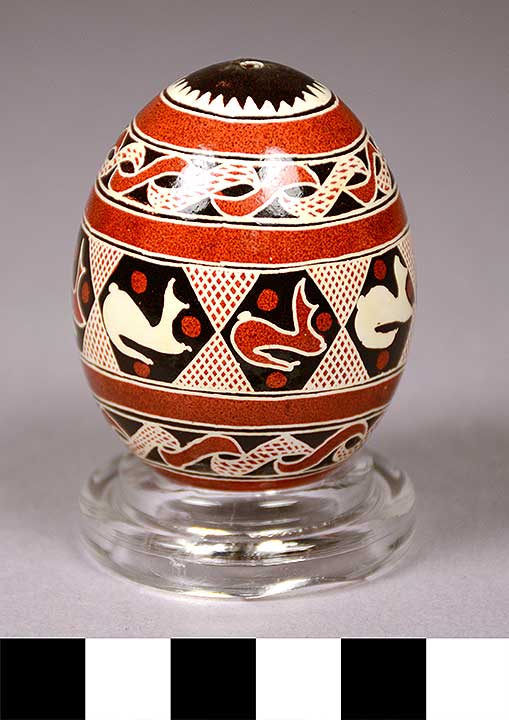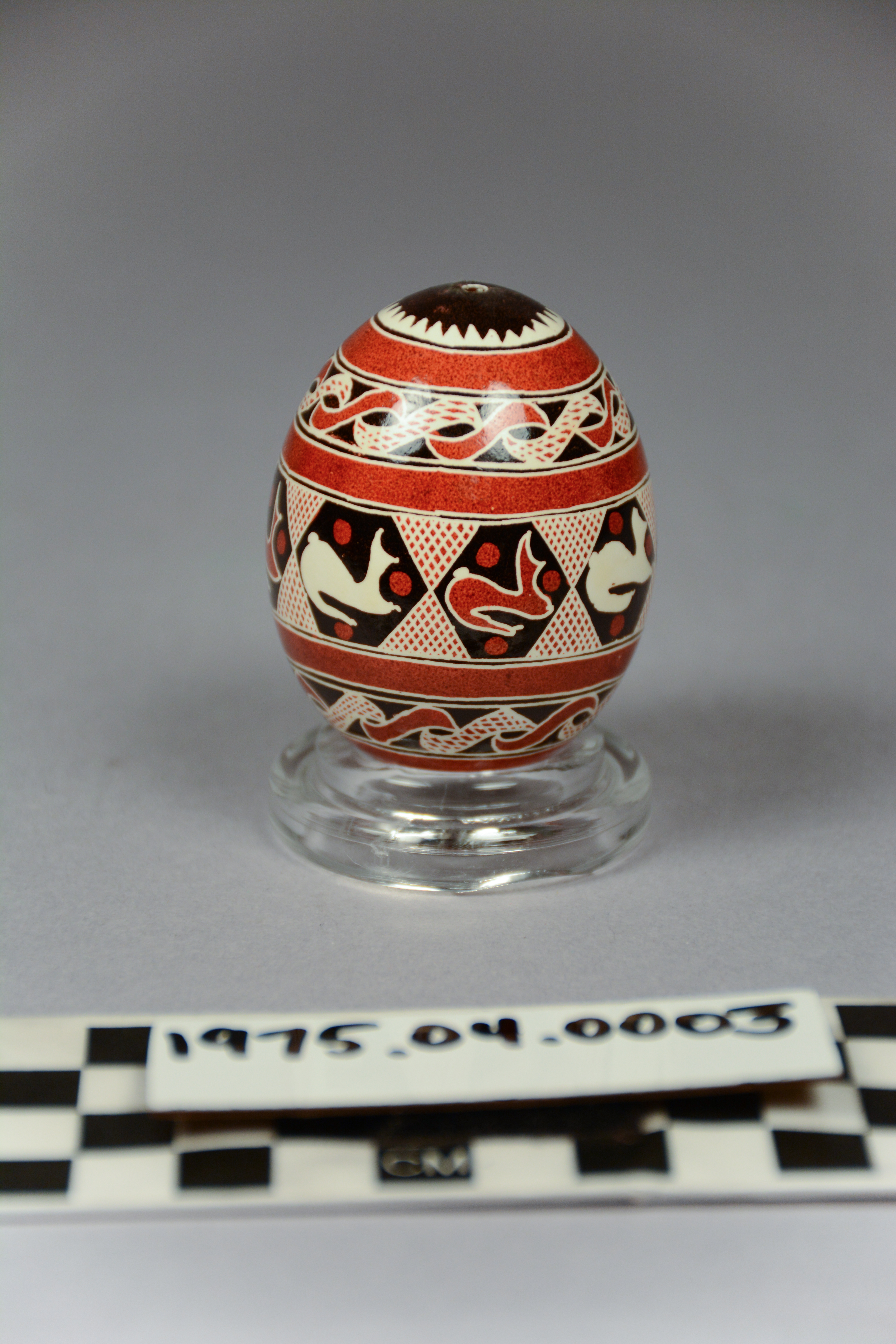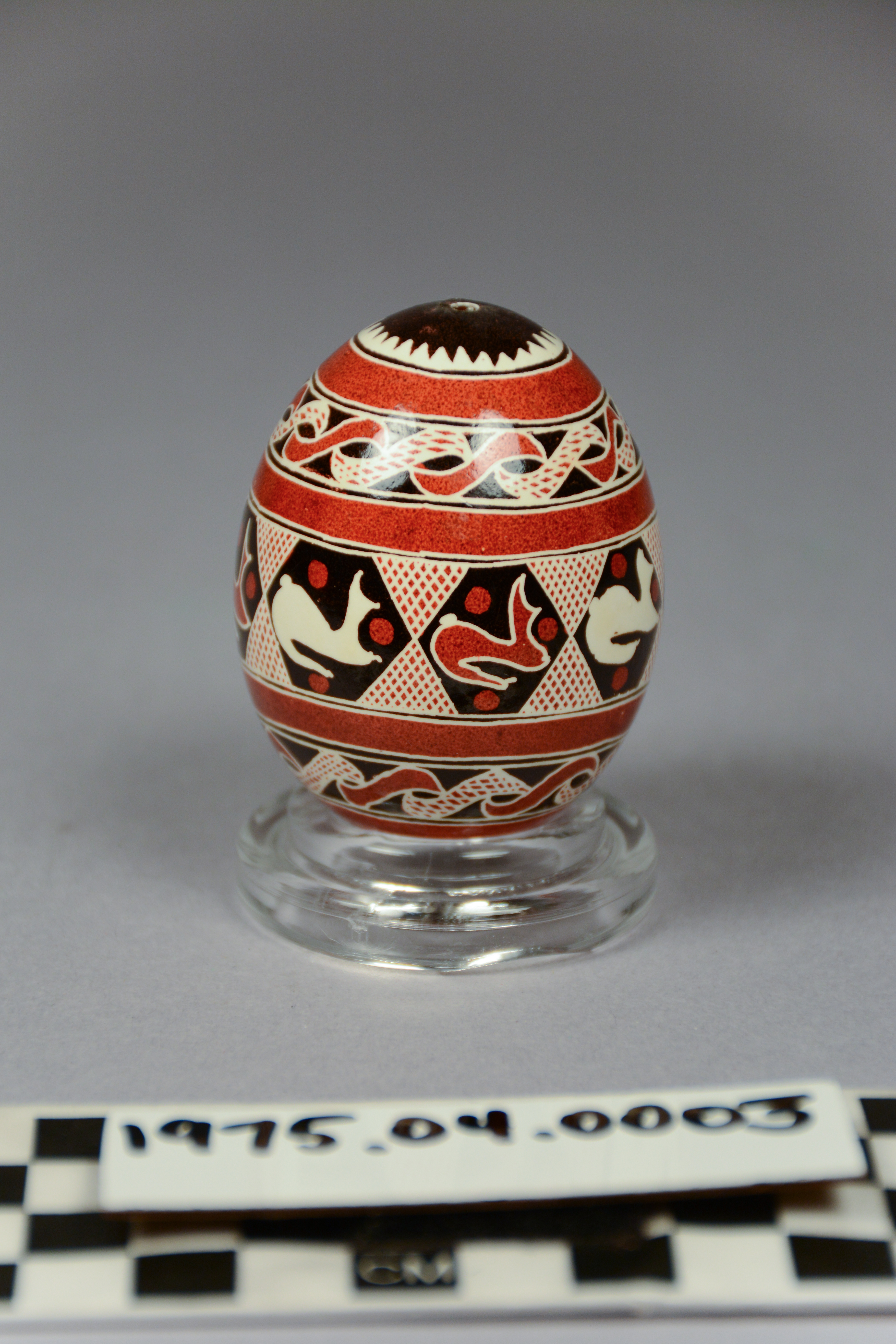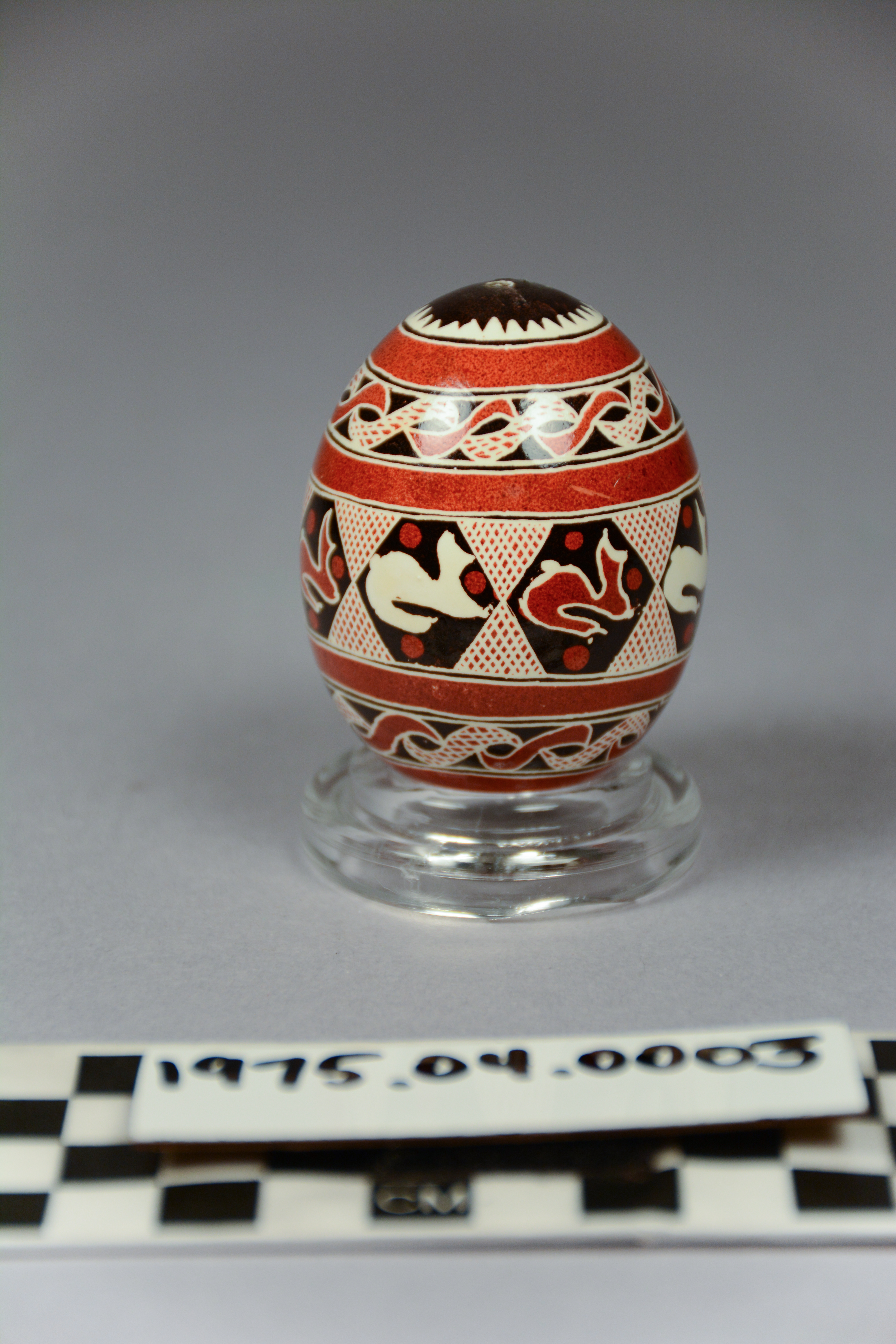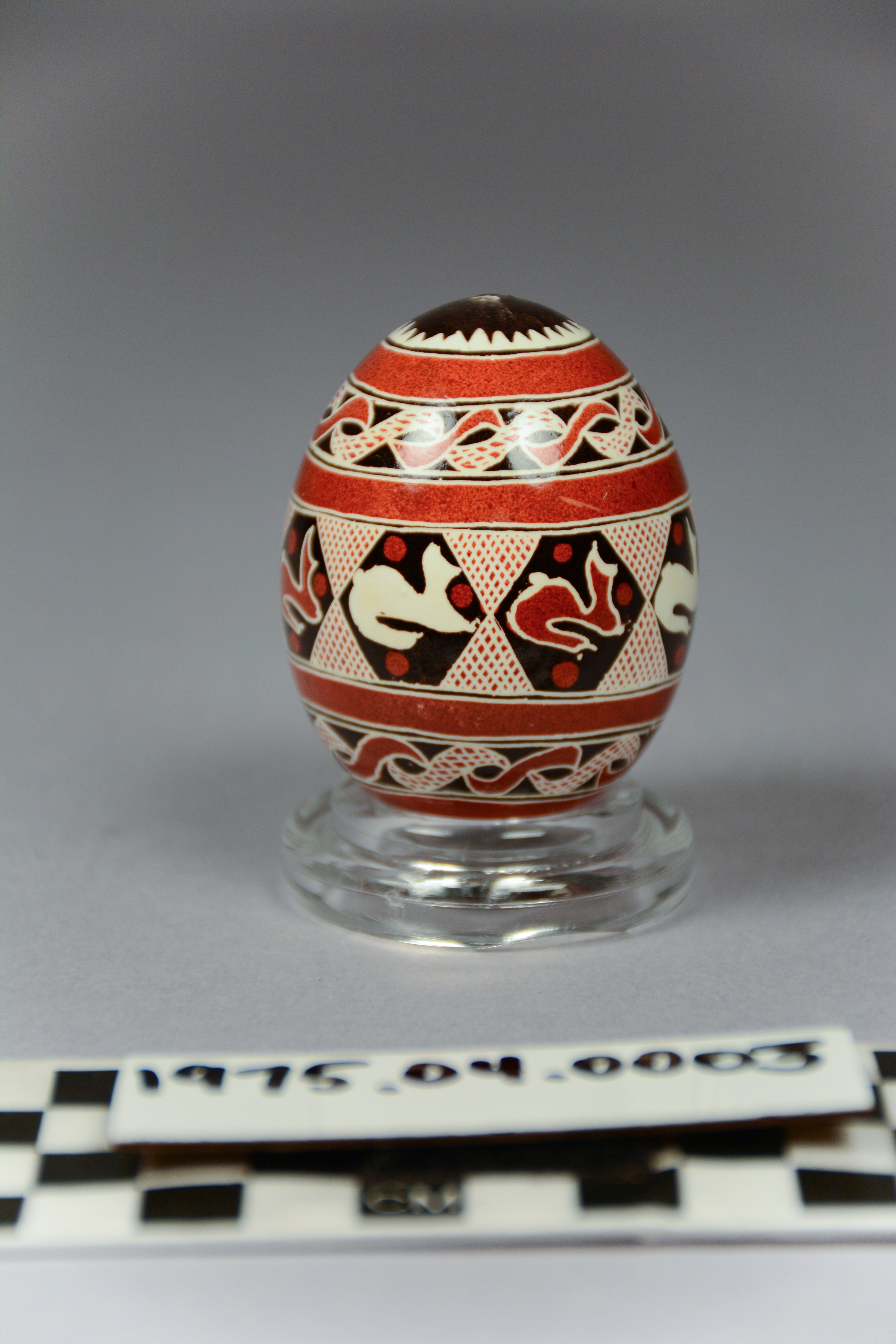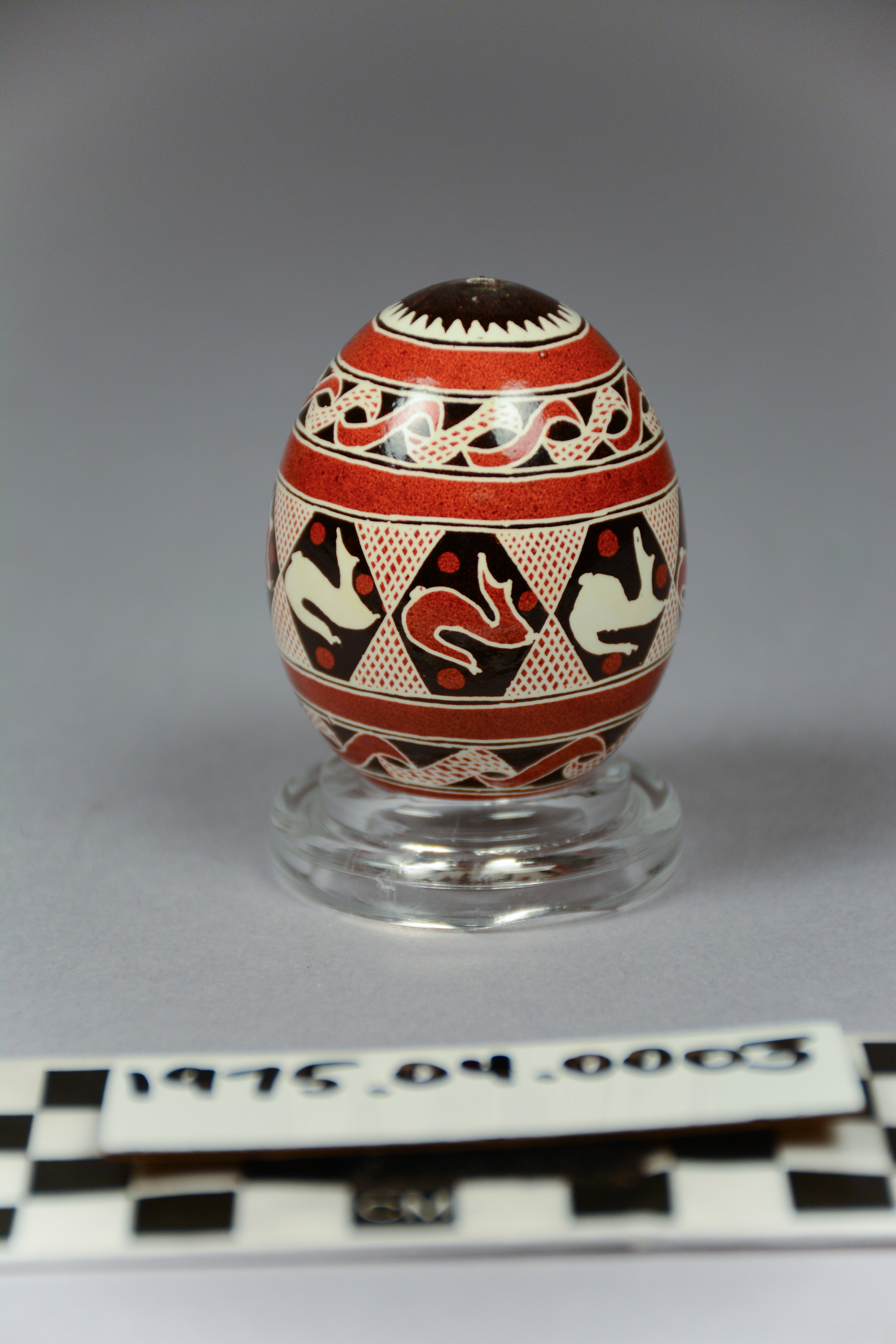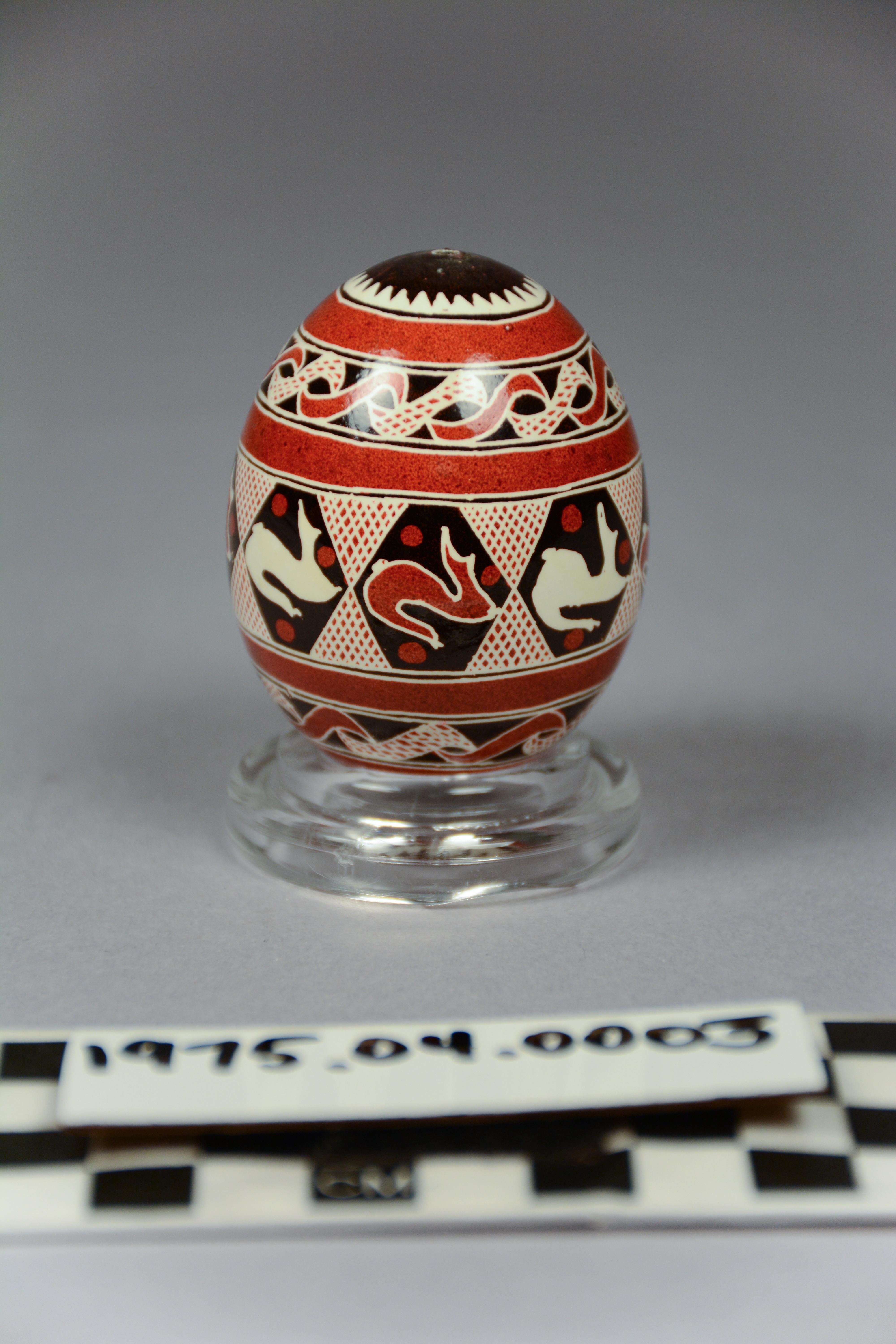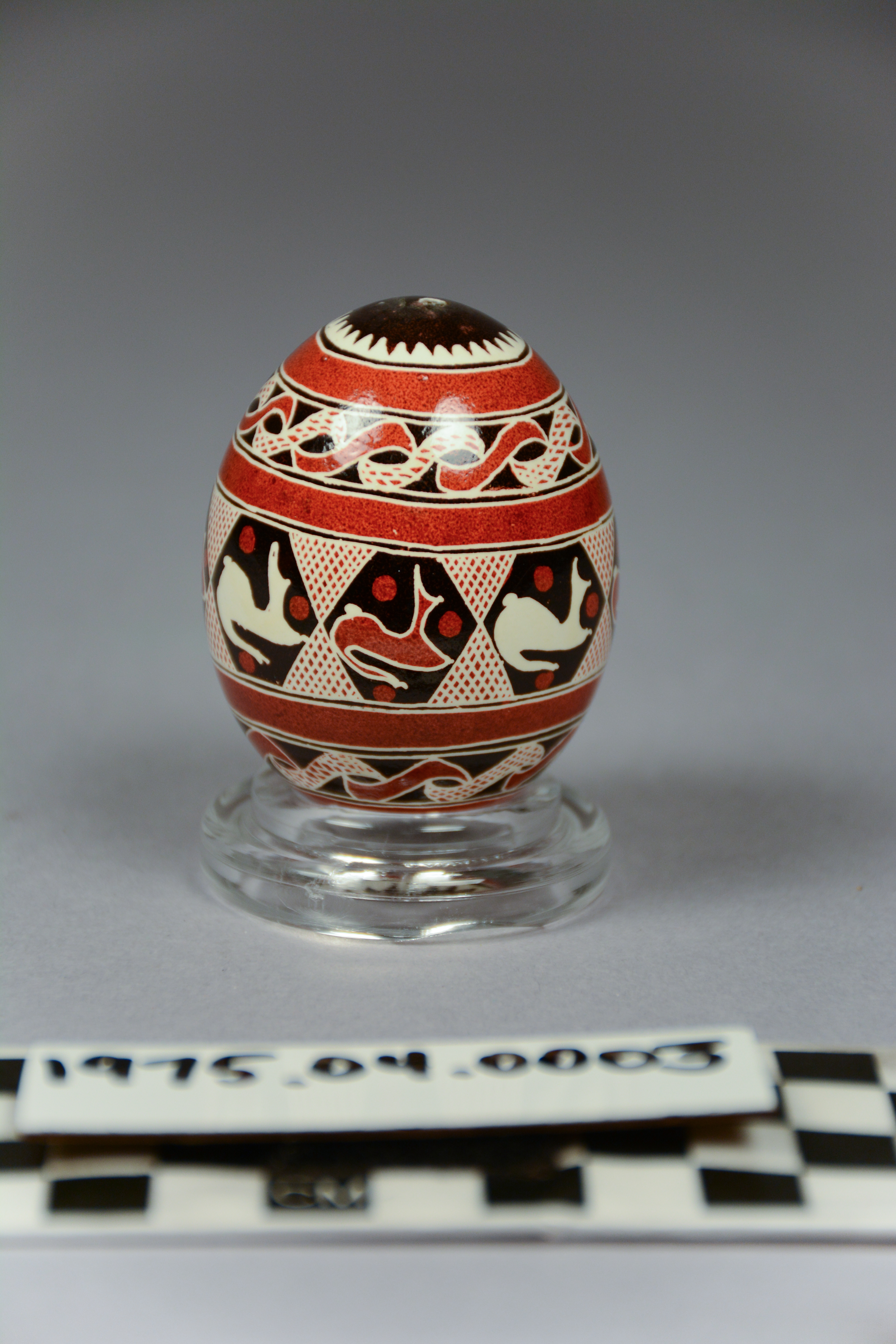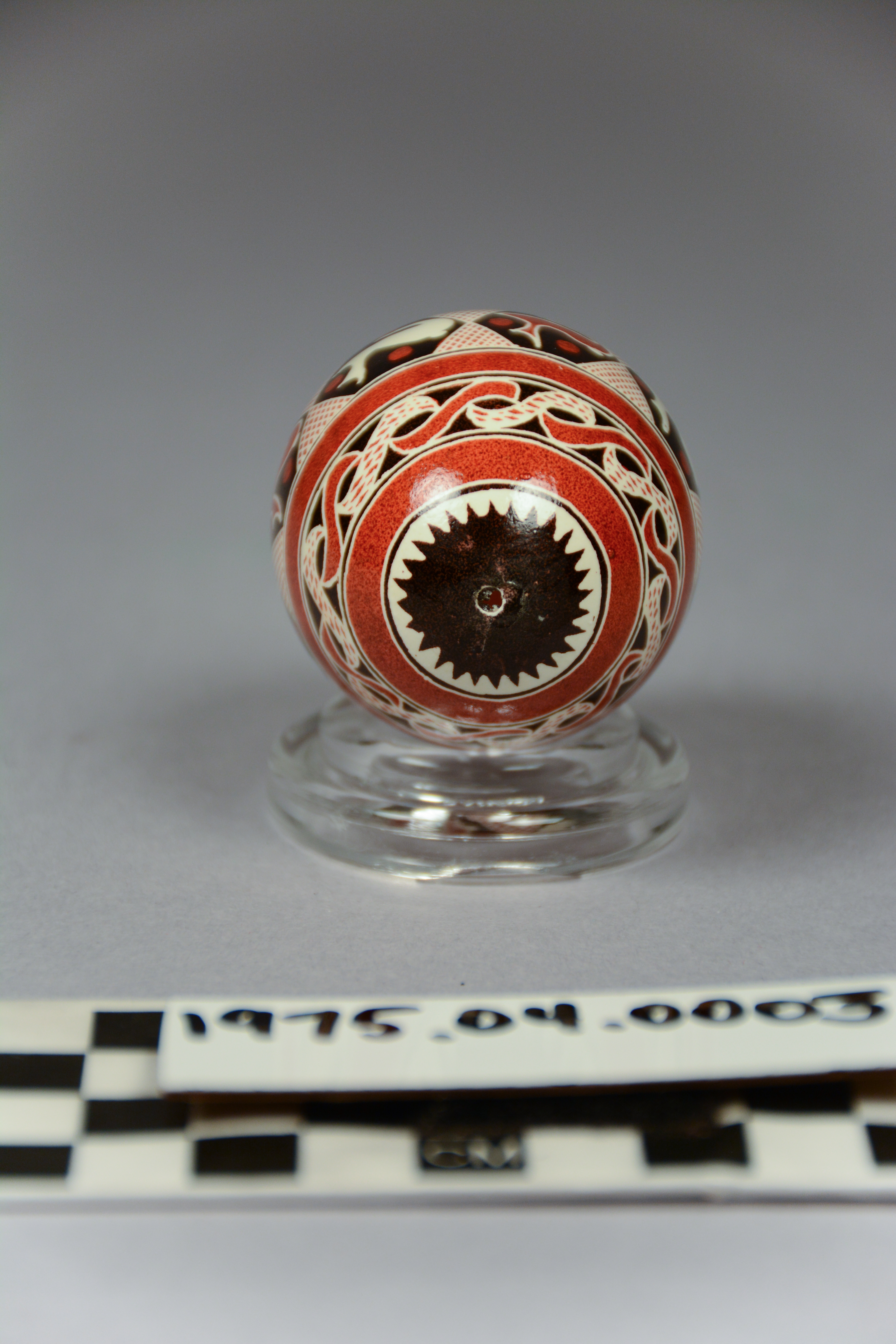
Pysanka, Easter Egg

1975.04.0003

Thumbnail of Pysanka, Easter Egg (1975.04.0003)

Detailed Images

Basic Information

Artifact Identification Pysanka, Easter Egg   (1975.04.0003)
Classification/
Nomenclature
  1. Communication Artifacts
  2. :
  3. Ceremonial Artifacts
  4. :
  5. Holiday Objects
Artist/Maker Unknown
Geographic Location
Period N/A
Date 1975
Culture Ukrainian
Location On Exhibitin the Europe exhibit

Physical Analysis

Dimension 1 (Height) 6 cm
Dimension 2 (Diameter) 4.6 cm
Dimension 3 (N/A) N/A
Weight 7 g
Measuring Remarks N/A
Materials Animal--Shell, Pigment--Dye
Manufacturing Processes Dyeing--Resist, Piercing

Research Remarks

Description


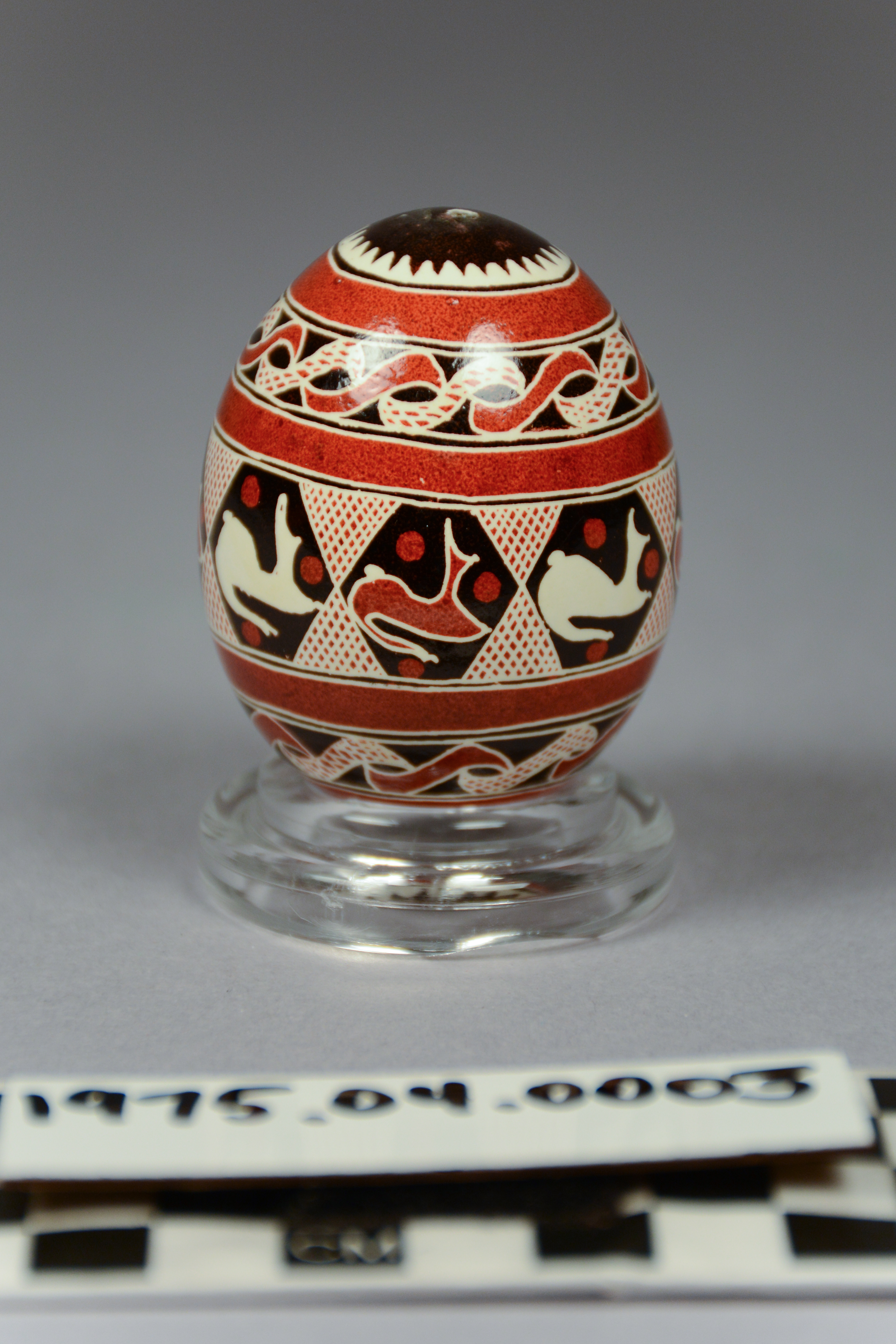
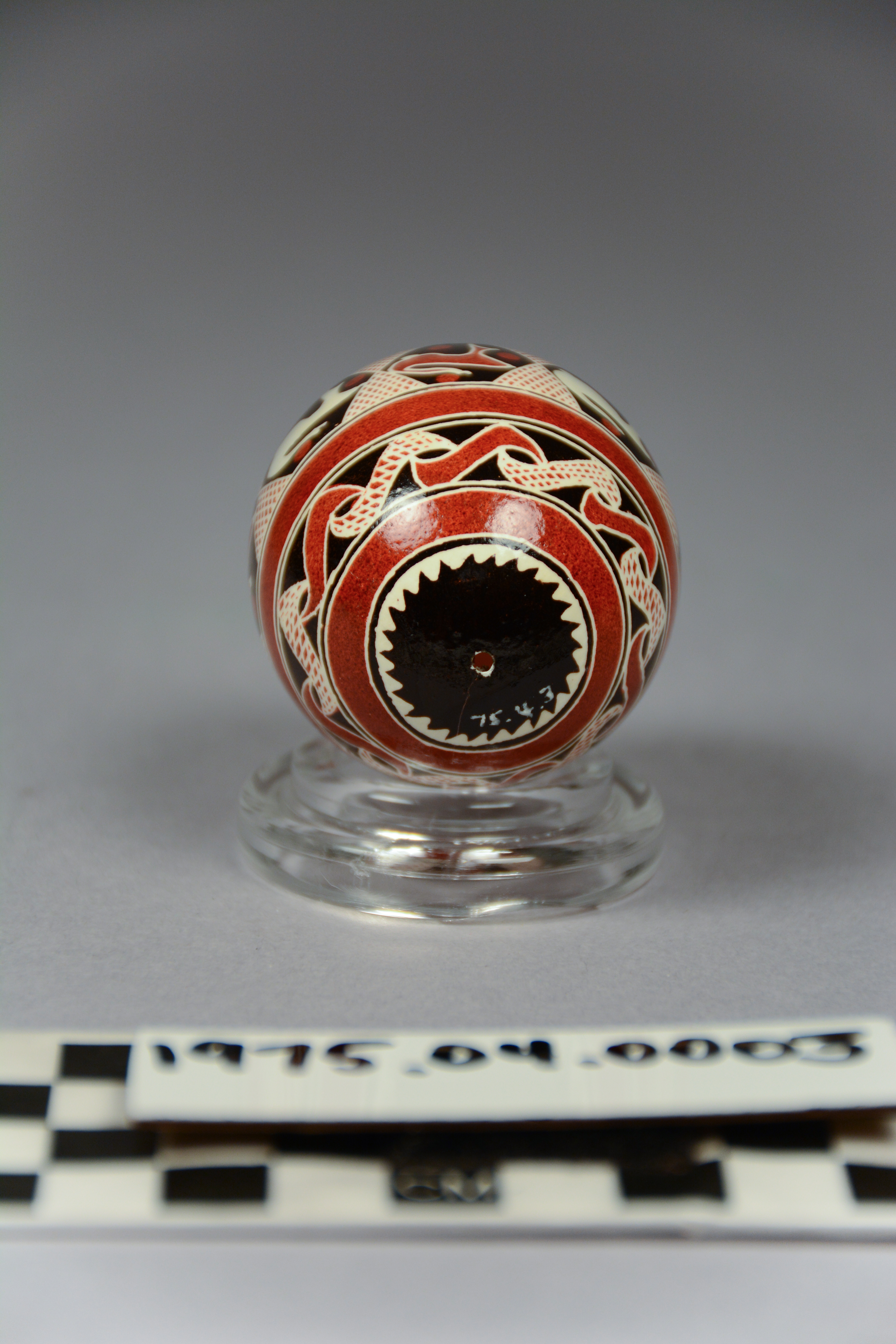
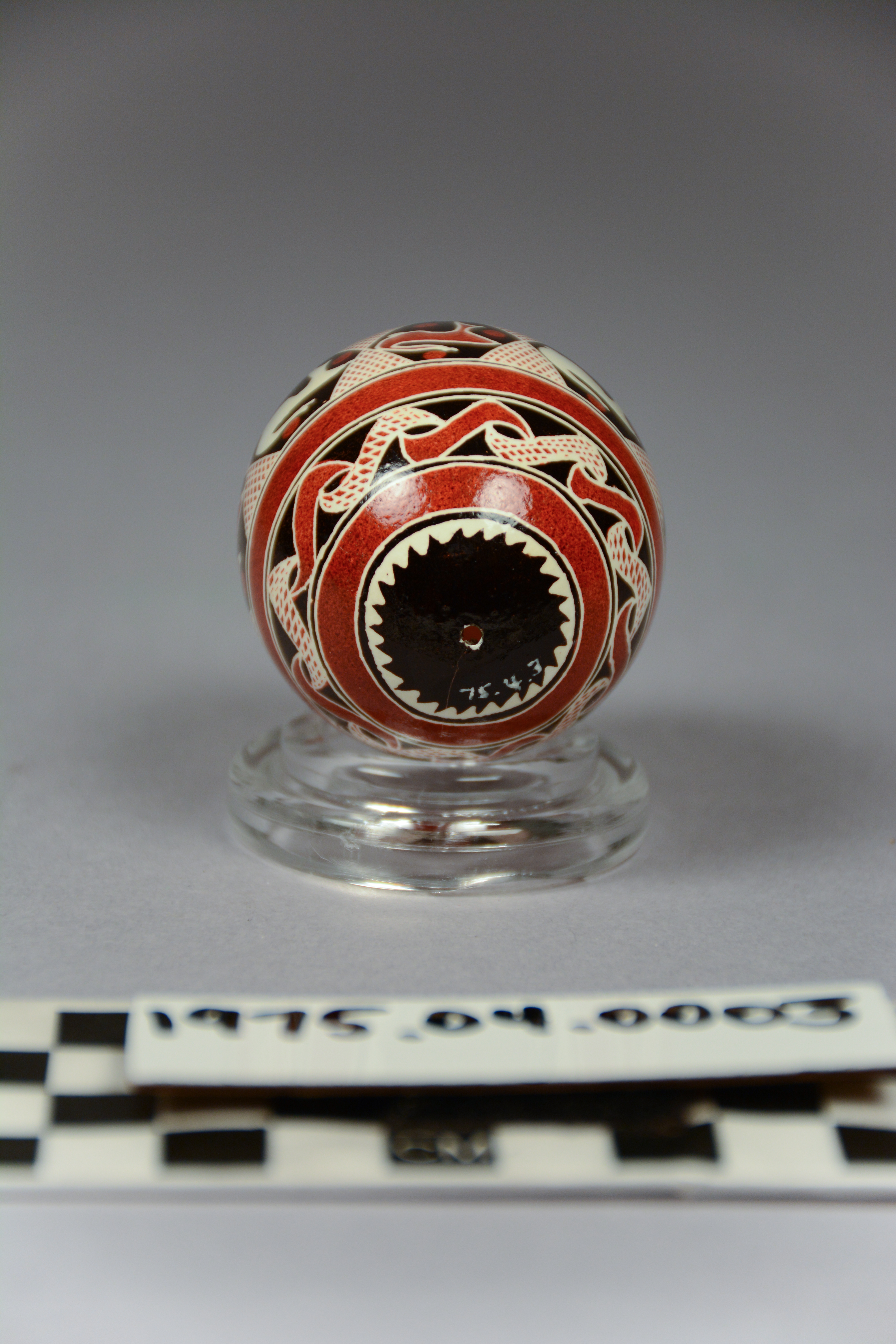
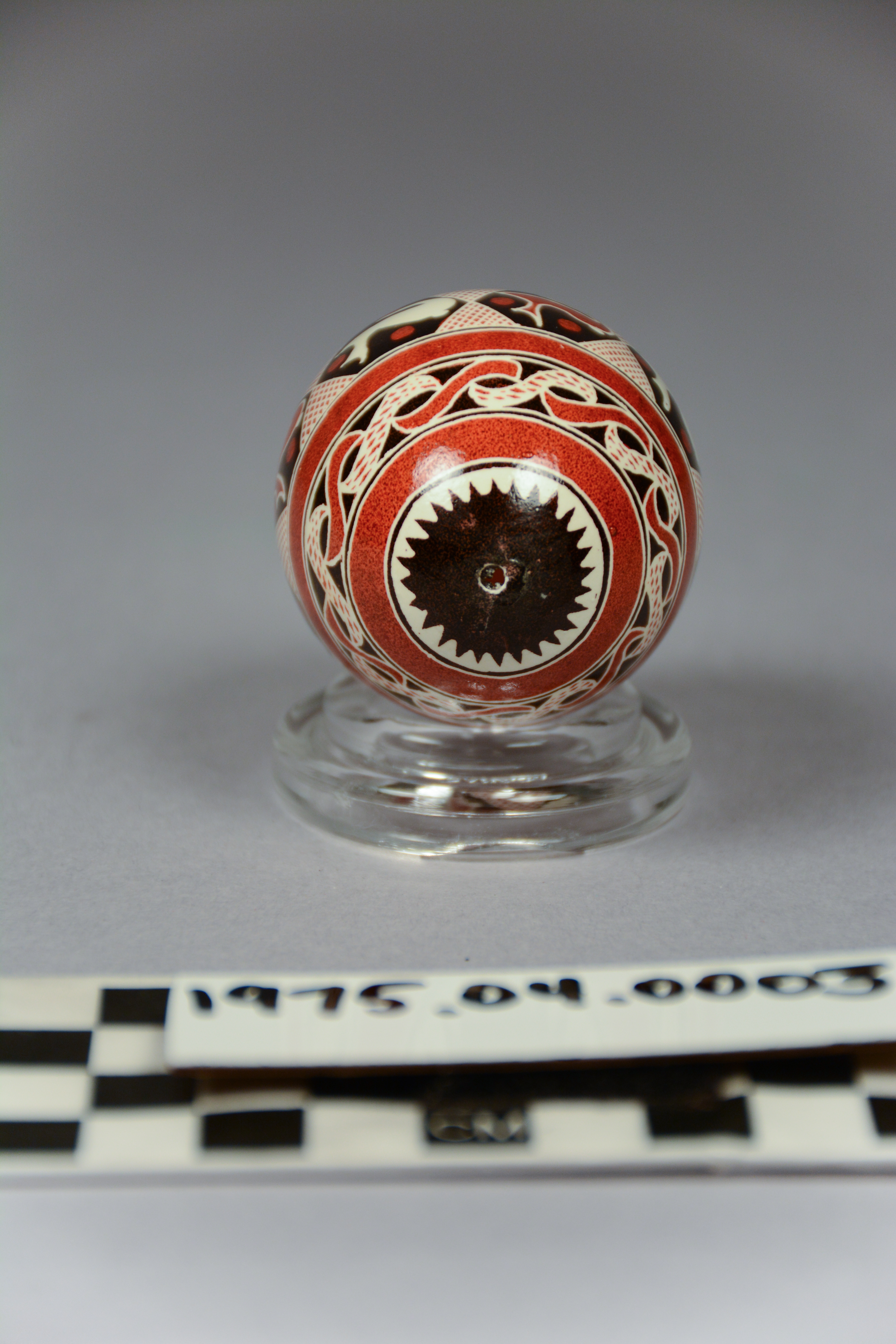
Featured Acquisition Page, Spurlock Museum, 2010: The Ukrainian folk tradition of egg painting, known as pysanky, dates back centuries. Individual eggs are called pysanka. The term comes from the Ukrainian word pysaty, a verb meaning “to write” that refers to the method of writing with wax on the egg in order to create the distinctive, intricate designs depicting plants and animals as well as geometric motifs. Crosses were added later as a popular design feature. The dividing of the egg into bands or areas of differing patterns is what identifies the Ukrainian method of egg decorating. While decorated eggs are commonly associated with Easter, the egg as a symbol of fertility and renewal dates back to ancient times. In pre-Christian times, these eggs were exchanged at the arrival of spring. Pysanka were also exchanged as amulets to protect or heal, as well as to bring good fortune.

The creation of a pysanka is quite a complex process. An egg is chosen, cleaned, and emptied of its contents. The Spurlock Museum pysanky collection consists of chicken, duck, and goose eggs. A writing tool (kitska) is used to apply wax in the chosen pattern. Dyes cannot stick to the wax, and the application allows dyes to stick to exposed areas only. Additional applications of wax throughout the dyeing process results in variations of color and pattern. The dyes are applied in sequence from lightest to darkest, beginning with yellow. When the final color is applied, the wax is melted off and the completed design is revealed.

The Ukrainian Student Association donated all eggs in the Spurlock Museum collection, preserving this unique folk craft for future visitors to enjoy.

Published Description Under Review
Bibliography

"Ukrainian Folk Art Objects Given by the Ukrainian Student Association," exhibit handout, s.d. (probably before 1981.

Artifact History

Credit Line/Dedication Gift of the Ukrainian Students Association, UIUC
Reproduction No

Contact

All information about our collection is constantly reviewed and updated. Please contact Dery Martínez-Bonilla, Registrar, if there is any information you are looking for that isn't currently online.