
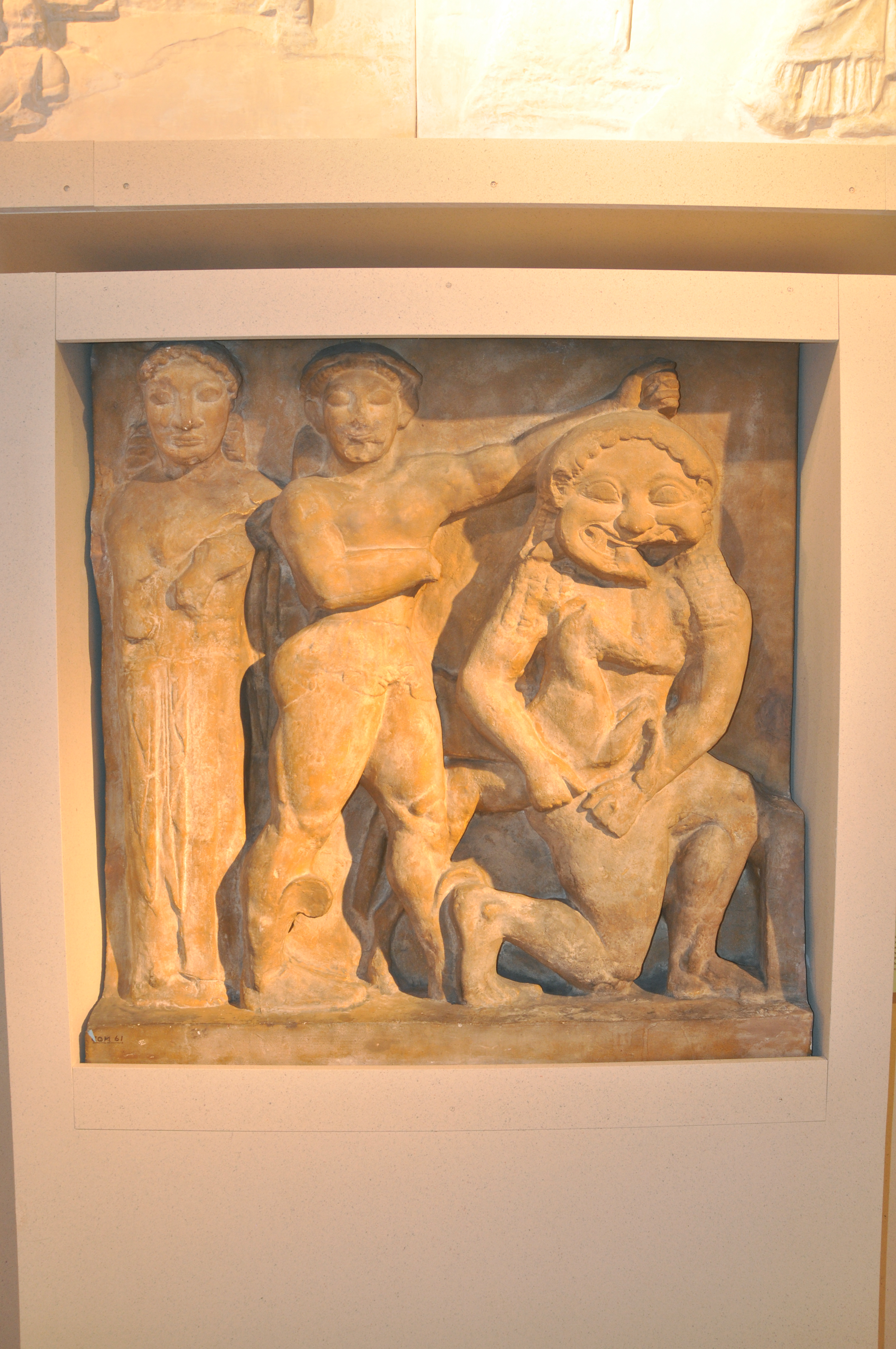
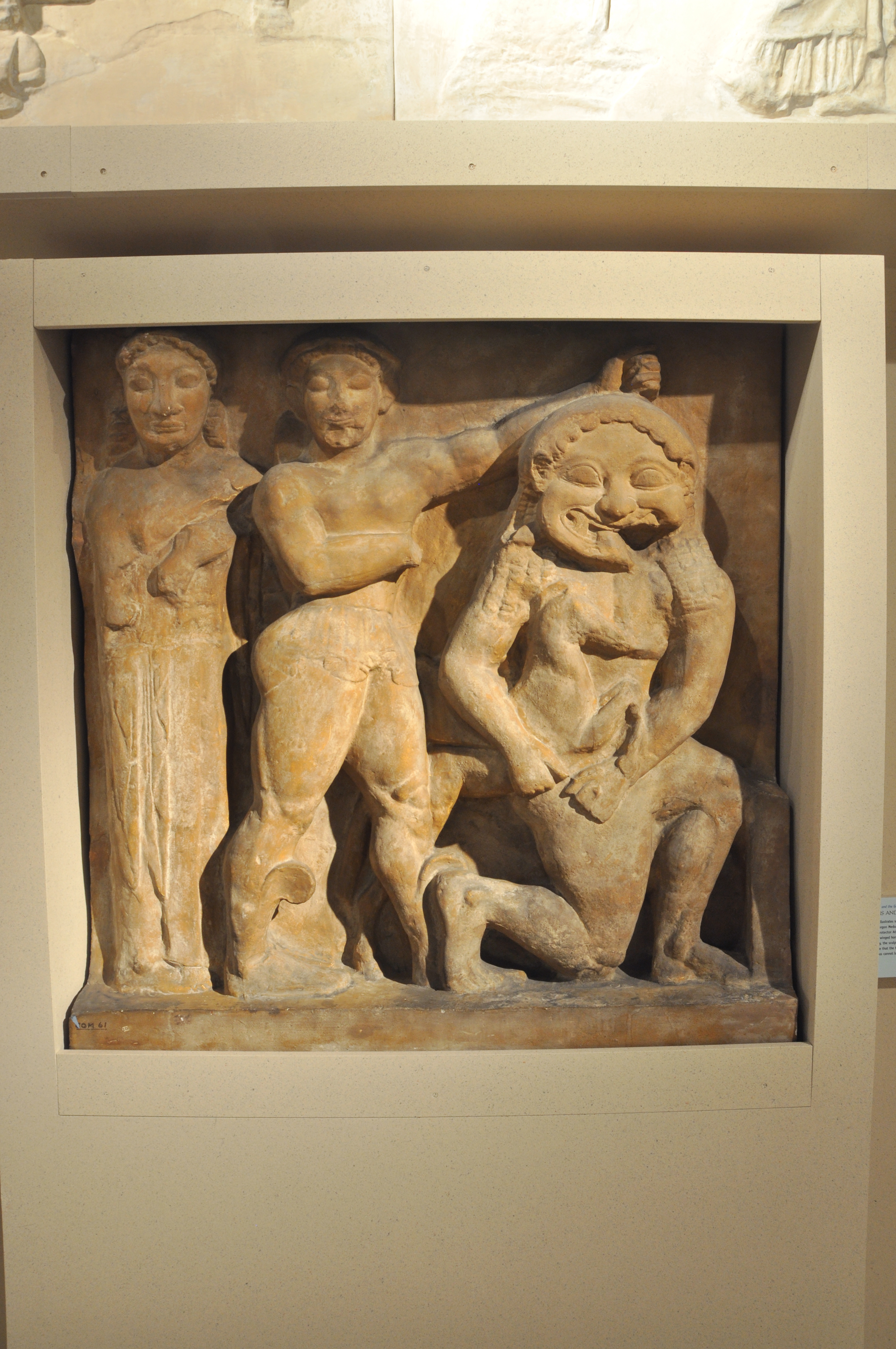
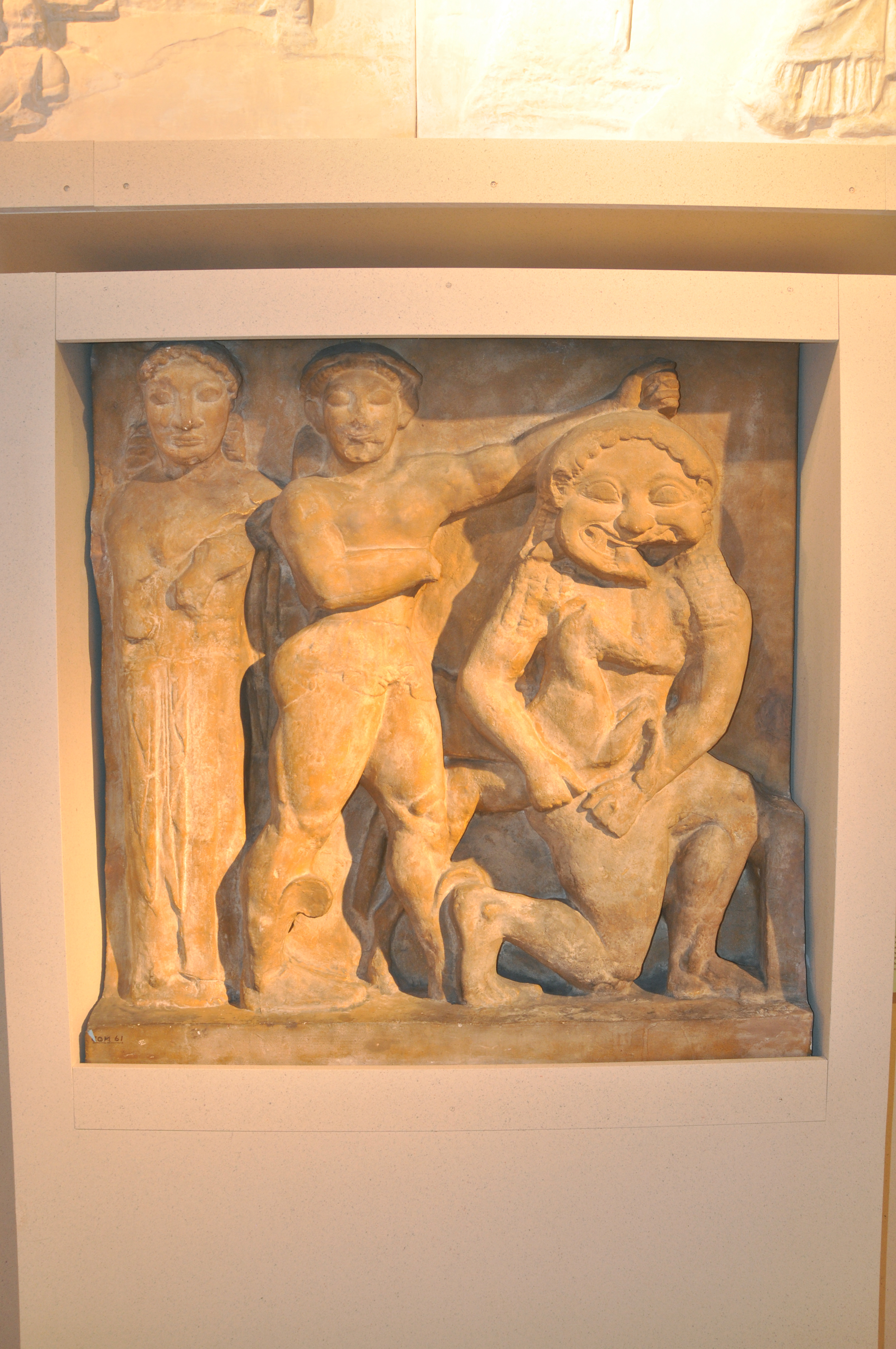
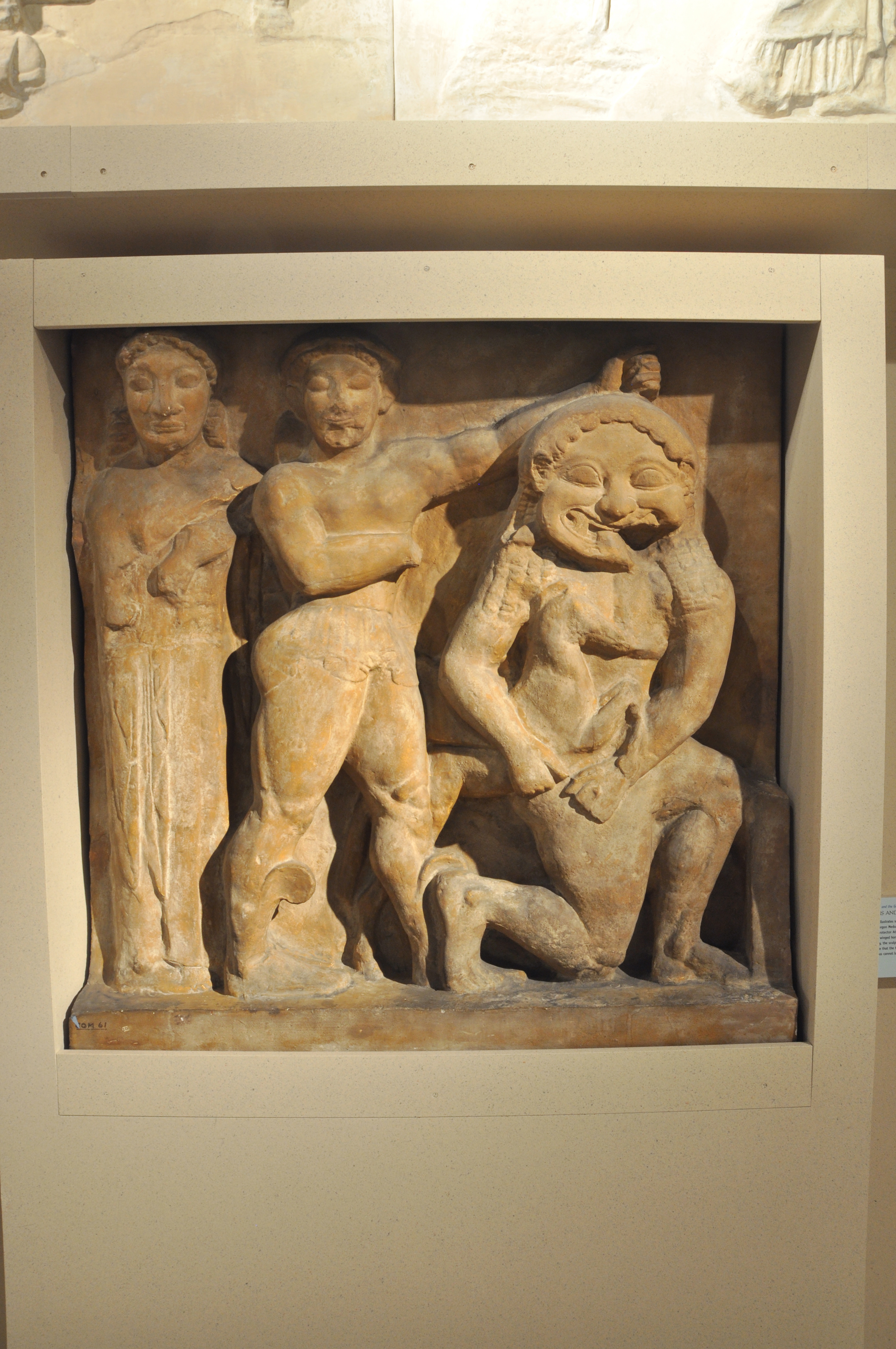
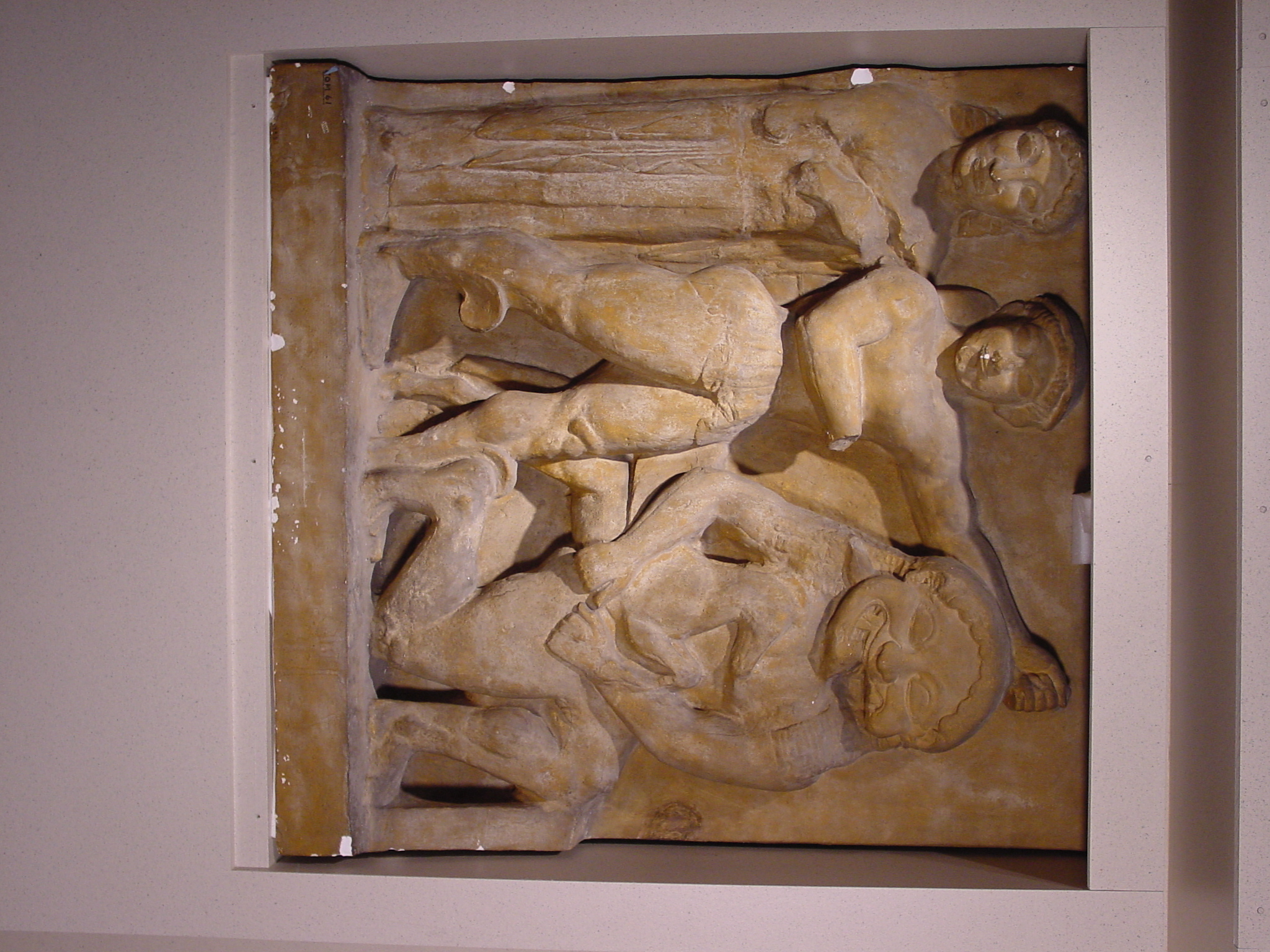
Plaster Cast Frieze of Metope: Perseus Beheading Medusa in Front of Athena
1914.04.0011
Basic Information
| Artifact Identification | Plaster Cast Frieze of Metope: Perseus Beheading Medusa in Front of Athena (1914.04.0011) |
|---|---|
| Classification/ Nomenclature |
|
| Artist/Maker | Unknown |
| Geographic Location | |
| Period | Archaic |
| Date | 530 BCE |
| Culture | Greek |
| Location | On Exhibitin the Ancient Mediterranean exhibit |
Physical Analysis
| Dimension 1 (Length) | 120.8 cm |
|---|---|
| Dimension 2 (Width) | 118.6 cm |
| Dimension 3 (Depth) | 23.0 cm |
| Weight | waived g |
| Measuring Remarks | N/A |
| Materials | Plaster |
| Manufacturing Processes | Cast |
Research Remarks
| Description | A well-preserved metope of the earliest period from the Greek colony of Selinus in Sicily. The city was founded about 628 B.C. by colonists from Megara and was captured and destroyed in 409 B.C. by the Carthaginians under Hannibal. This metope illustrates a favorite Greek myth in which Perseus, with the help of Athena, is enabled to elude the fatal spell of the Gorgon's petrifying gaze and slay her. Then, from the resulting blood flowing from the wood springs the winged horse, Pegasus, seen in Medusa's arms. The sculptor, in his desire to depict the whole story, has crowded the successive events into one scene as though they had occurred simultaneously. |
|---|---|
| Published Description | Under Review |
| Bibliography | Robertson, Martin. A History of Greek Art. Cambridge University Press. 1975. |
Artifact History
| Credit Line/Dedication | Classical Museum Purchase |
|---|---|
| Reproduction | yes, Original made of Sicilian limestone now in Museo National, Palermo. |
Contact
All information about our collection is constantly reviewed and updated. Please contact Dery Martínez-Bonilla, Registrar, if there is any information you are looking for that isn't currently online.